Showing posts with label energy efficient. Show all posts

Saturday, September 19, 2015

BioDiesel From Cooking Oil

Vegetable Oil Bottle
It is simply the conversion of cooked oil that is no longer good for human consumption to be transferred into biodiesel that can be used in any diesel engine. Yes, any diesel engine!, in a matter of fact biodiesel that is processed correctly is even better for your engine than regular diesel can you believe that!, don't and we will tell you why later.

Just imagine that if we made use of the 52.1 million tonnes ,of palm oil alone, that were produced in 2012 and transformed it into biodiesel (of course that will mean that we had 26.05 million tonnes of cooking oil that was got rid of and the other 26.05 of palm oil was consumed with whatever was cooked in that oil) so if we used that oil and turned it to biodiesel then we will have substantial amounts of biodiesel that can fuel trucks to load goods to and from thriving cities with lower, I mean much lower environmental impact than diesel. Carbon Dioxide emissions are 80-85% less from biodiesel compared with regular diesel. That is good news for everyone especially for cities that are too congested and are suffering from car emissions.

If we look at the total world production of vegetable oil which is 175.65 million metric tonnes, then using the same criteria we could have access to around 87 million metric tonnes of used vegetable oil that means 735.15 million barrels of potential biodiesel. In 2010 the world diesel consumption were 9173 million barrels a year and that is around 8% of the total world need for diesel oil. If you find that 8% is just too little then please let me tell you that you are wrong. Because if you look at the quantity of carbon dioxide that can be reduced from this 8% you will reconsider your thoughts (I hope) for the record one liter of diesel produces 2.772Kg of CO2 compared with just around 0.5Kg from diesel oil. That is 2037.83 million tonnes of CO2 compared with 367.575 million tonnes of CO2 from Biodiesel. One tree can process 21Kg of CO2 in 1 year this would mean that from this 8% then we are reducing the need to plant around 80 million trees (but don't get me wrong we need to plant millions and millions of trees)

Not only that, but usually in many developing countries oil is disposed off in a very non environmental friendly way. This leads to many problems among of which is the accumulation of oil on the surface of lakes or bodies of water which leads to reduced oxygenation of water and thus threatens marine life or at least impacts fish numbers in those areas. You might want to know more about the waste oil disposal issues by visiting the link that better addresses such problem.    

But don't get too excited there many engine manufacturers recommend that pure biodiesel is not a good alternative to your car or truck and say that your engine is under warranty if you use 20:80 ratio that means that you can only mix 20 gallons of biodiesel to 80 gallons of regular diesel oil this term is also known as B20. You can use B100 that complies with the ASTM (American Society for Testing materials) but that right now is not recommended by many engine and car manufacturers around the world.  

VW XL1
Recently the car guru Volkswagen has revealed its new highly efficient car that they claim that is capable to go for as much as 60 miles per one liter of diesel! and if we use a B20 blend this would mean that the car is a really good choice for those who are caring for earth and the environment around them. Its name is the XL1 and is a hybrid car that has the name of the one liter car!. Unfortunately its price tag is around 111K in Euro and is a concept car, but there are other diesel car that are within the reach of the public and here are the best 10 diesel cars with the highest MPG.
For me even if it ranked fourth in the list but I will really consider a VW Golf if I ever want to buy a new car for me (I think these are my male genes speaking now).

All in all the message is clear, we can be green and care about the environment, while also keeping our modern lifestyle. We just have to make certain adjustments and tweaking so that we live in a more energy conserving and use more energy efficient gadgets.    

For even more in depth info around this topic you might want to see:
How to make your own biofuel
How To Start Your Own Biodiesel Fuel Program (PDF)
Palm Oil Facts and Figures
how it's made wikihow topic
how to convert cooking oil to a biodiesel
McDonald's turning green Plan
Brazil want to become the Saudi Arabia of Ethanol

Hope you like this article, please for your opinions and comments type them in the comment box below, thank you.
Sunday, May 3, 2015

Coal: A green energy!

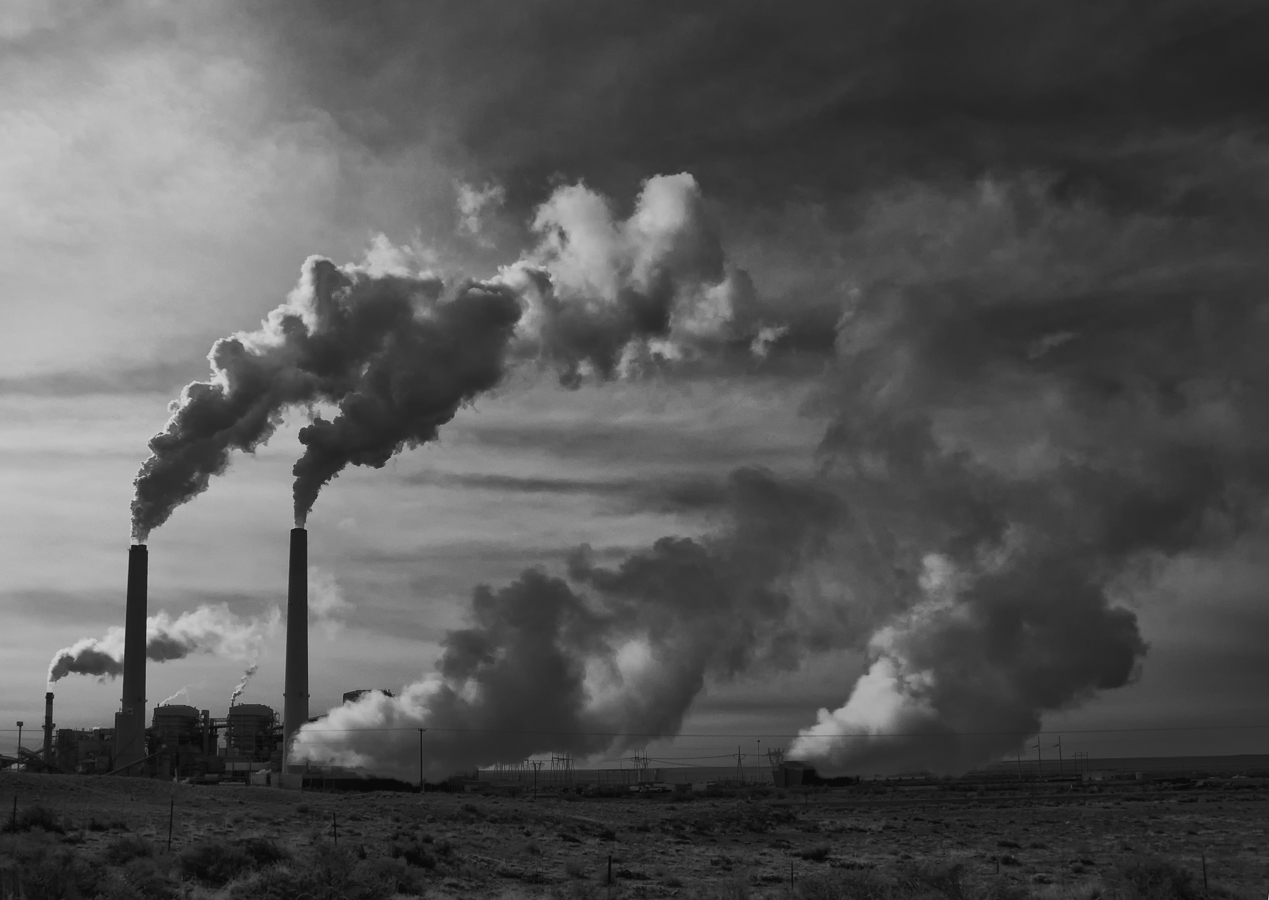
When someone speaks about coal, it always comes to mind that coal is a polluting source of energy that we need to stop using, to keep our planet safe. But wait a minute; did you know that 41% of the world’s electricity production is based on coal?!
But what does this mean? Why countries like USA and Germany are are still using coal for electricity production?

The answer is not a simple one, but it is a combination of economic, supply and demand, technology and sometimes even politics. But we all know how coal is very polluting energy source was the sole reason for cities like London to suffer from Black cloudy sky that blocked sun light even in good summer days. At that time many poets mentioned these clouds of smog in their poems. And we thought that this century is not going to be a coal tolerant one! Surely we (environmentalists) were wrong about that.

Tuesday, August 27, 2013

Making Fossil Fuel Market Green!

For years now there are researches and investments that are dedicated to find new ways to reduce fossil fuel negative impact on the world's environment by finding alternatives fossil fuels. But is that enough and will that be applicable in the next 10-15 years? So why not try to make fossil fuel industry more efficient, less polluting and greener market? What will be the impact of that on the environment?

As it is known fossil fuel market is a huge market that is estimated to be of hundreds of billions of dollars so it will make sense to apply some enhancements to this market that will make it more environmental friendly to earth. But how can this be done?

Please note that we are not going to refer to the automobile industry as we think that it needs a totally different article, nor we are going to refer to factories for example plastic factories (though we might consider dedicating an article or more about these things). In this article we are going to look at the industry from the point these fossil fuels are extracted from the earth to the point they are delivered to produce energy.

In this industry there are many process that are applied and so there is a need to work on each process to make it more efficient or at least become less polluting.

Saturday, July 27, 2013

Are We Actually Using Batteries?!

In our daily life there are many uses to batteries ,as they are the power source of most of our gadgets, but the question that comes to my mind is are we using batteries to their full potential?!

Well, to answer that question I've looked for many sources to find answers. I even bought a digital voltmeter!. And started measuring the output voltages of the batteries that I was going to dispose ,as they no longer ran my gadgets, and to my surprise most of the batteries I was measuring were giving an output voltage of not less than 1.3 volts! which is good, as brand new batteries have an output voltage of about 1.5 volts. After that I started to look for ways to make use of the remaining voltages in those batteries. Oh ya I want to squeeze the juice out of my batteries!

I found out that there are many gadgets that need batteries to be of great power not only to have a good output voltage but also to have a good current output. mostly gadgets like portable CD players or my digital cameras will need more power from the battries than other gadgets like a TV remote control or a ceiling clock. So I found out that batteries that are no longer good to run my CD player were great for running my TV remote control with great efficiency and latency!

Making use of your batteries is not only more economic but is better to the environment as the manufacturing process of batteries is of course adding carbon emissions to the globe. So it is responsibility to make use of these batteries and also a responsibility to dispose those batteries properly. 

Moreover I had another battery to run a clock!. So I figured that the gadgets I use need different quantities of "juice" to run so I started looking for ways to drain the juice out of them.

The most effective way to drain a battery is by placing it in a flash light, of course the flash light is going to go dimmer as the batteries run out but it is an efficient way to squeeze the juice out of your batteries.

Another way is to place batteries in a remote control that is used for TV, DVD player, Video player etc almost most remote controls need very low energy and will not mind batteries that are of a voltage lower than 1.3 volt. And even if the energy were too low the remote control will still function but its range is going to be reduced.

If you have a cordless mouse or keyboard then you can place theses batteries in these gadgets as they too do not need that much energy of the batteries, but be careful to place batteries that are too drained to run them as they will no longer run.

If you are into electronics then you might want to look into Ray's DIY Electronics Hobby Projects as this is a good way to get the juice of your batteries until they are as low as 0.65 volts.

Finally and most effectively also the most green solution is to get rechargeable batteries and replace all your batteries with rechargeable ones. Even though it might be more expensive to buy but after using them some more time you are going to save a good deal of money rather than having to buy more batteries. Here's an article that has more information about rechargeable batteries.

For your comments and thoughts please write it in the comment box below


Thursday, November 8, 2012

LED: Energy Conserving Light Sources


LED lights have many advantages over other kinds of lighting, including compact fluorescent lights, or CFLs, an unsafe lighting technology. Here are eight reasons to love LEDs, or light-emitting diodes, adapted from material provided by Polar-Ray LED Lighting Solutions.

1. LEDs Have Been Around for Decades

ledPhilips
LED lighting is a proven technology that's been in widespread use since the 1960s. Traffic lights, electronic instruments and other devices have relied on LED lighting -- and if you're old enough to remember the first geeky calculator you bought in the 1970s, there's a chance it may have been lit with LED light.

2. LEDs Can Create a Warm, Soft Glow

ledsGeneral Electric/Polar-Ray
Some users associate LEDs with a harsh, cold, glaring light, but newer LEDs are capable of producing a warm, soft -- dare I say romantic? -- glow, just like the inefficient incandescent lights that are still widely used.

3. LEDs Are Ridiculously Energy-Efficient

LED lights use 75 to 80 percent less energy than older incandescent lights. And because lighting consumes a significant amount of household energy, the savings can add up fast.

4. LED Lights Will Save You Money

led lightsPolar-Ray
If you're more motivated by cash than by environmental concerns, here's your catnip: LEDs will save you money over both CFLs and regular incandescent lights. One study found that over the lifetime of an LED light (estimated at 50,000 hours), LEDs cost just $95 to operate -- CFLs, by comparison, cost $159 over the same period, and incandescents cost a whopping $652. These figures don't even include the hassles of buying and replacing lights. LEDs cost more up front, true -- you can expect to be at least $10 per bulb, depending on the type and the manufacturer -- but like most new technologies, that cost is dropping every year.

5. LEDs Might Outlast You

If you hate changing burned-out light bulbs, raise your hand -- or, on second thought, don't. LEDs are generally estimated to last at least 25,000 hours, and often up to 50,000 hours. Incandescents only last 1,200 hours, so you'd have to replace an incandescent light 42 times to get the light of a single, solid-state LED. CFLs, by comparison, usually last 10,000 hours, so you'd only have to change them 5 times to match one LED light. And speaking of changing light bulbs...

6. LEDs Contain No Toxic Mercury

light emitting diodes
I would be a big fan of CFLs if they didn't contain mercury, a toxin associated with birth defects, brain damage and other disorders. That's why CFLs can't be thrown in the trash -- and it's very tricky to clean up a broken CFL. LEDs' biggest advantage over CFLs is that they contain no mercury or other hazardous materials. None. Zip. Nada.

7. LED Lights Are Cool - Literally

Ever try to unscrew a hot light bulb? (Not twice, I'll bet.) Incandescent and halogen lights can be very hot, which leads to a number of safety issues. LEDs, on the other hand, are totally cool even after several hours of use -- they're even cooler than CFLs.
leds

8. LEDs Can Be Dimmed


LED lights can be dimmed, which is not always the case with CFLs. Additionally, LEDs come on instantly (again, better than CFLs) and don't flicker (ditto). Finally, their light output is constant over the lifetime of the lamp, fading only when the lamps are at the end of their very, very long life.
led

9. BUT - Not All LEDs Are manufacruerd Equal

Unfortunately, the Department of Energy and others have noted that there are some poor-quality LED manufacturers out there selling inferior products that grow dim, shift in color or begin to flicker after just 1,000 hours or so. (Note the two photos at left, after 100 hours and after 1,000 hours.) To protect yourself from these problems, look for Energy Star-qualified LED lights made by reputable manufacturers.

Saturday, October 1, 2011

Paper or Plastic Which is Green

Almost everyone has heard that to help the environment at the grocery store you need to choose paper bags over plastic. But why is this? And with new manufacturing technology, does that adage still hold true?

In a study done in 1990, paper and plastic bags were assessed based on both the energy used to produce the bags and the pollutants produced from the bags. The study had interesting results. Researchers found that products of two plastic bags used only 87% of the energy used to produce one paper bag. To produce a paper bag, high amounts of coal, wood, and petroleum are used, resulting in a total energy usage of 1,680 kilojules (kj). Plastic bags, on the other hand, use petroleum and natural gas, and use only 1,470 kj to produce two.

In looking at the pollutants generated by both plastic bags and paper, plastic bags again came out the winner. Researchers divided the pollutants into three different waste categories: solid, atmospheric, and waterborne. In every category, two plastic bags produced less pollution than did one paper bag. There are flip sides to the argument, however.

While plastic takes less energy to produce than paper, and produces less pollutants, paper can be composted, while plastic cannot. Also, a common energy source to produce plastic bags is nuclear fission, which results in radioactive waste – a potentially harmful pollutant in its own right. So what is the right answer? Unfortunately, there is no clear cut winner. If you really want to be as contentious as possible when bagging your groceries, bring your own string or cloth bags that can be reused.