Showing posts with label energy saving. Show all posts

Sunday, May 3, 2015

Coal: A green energy!

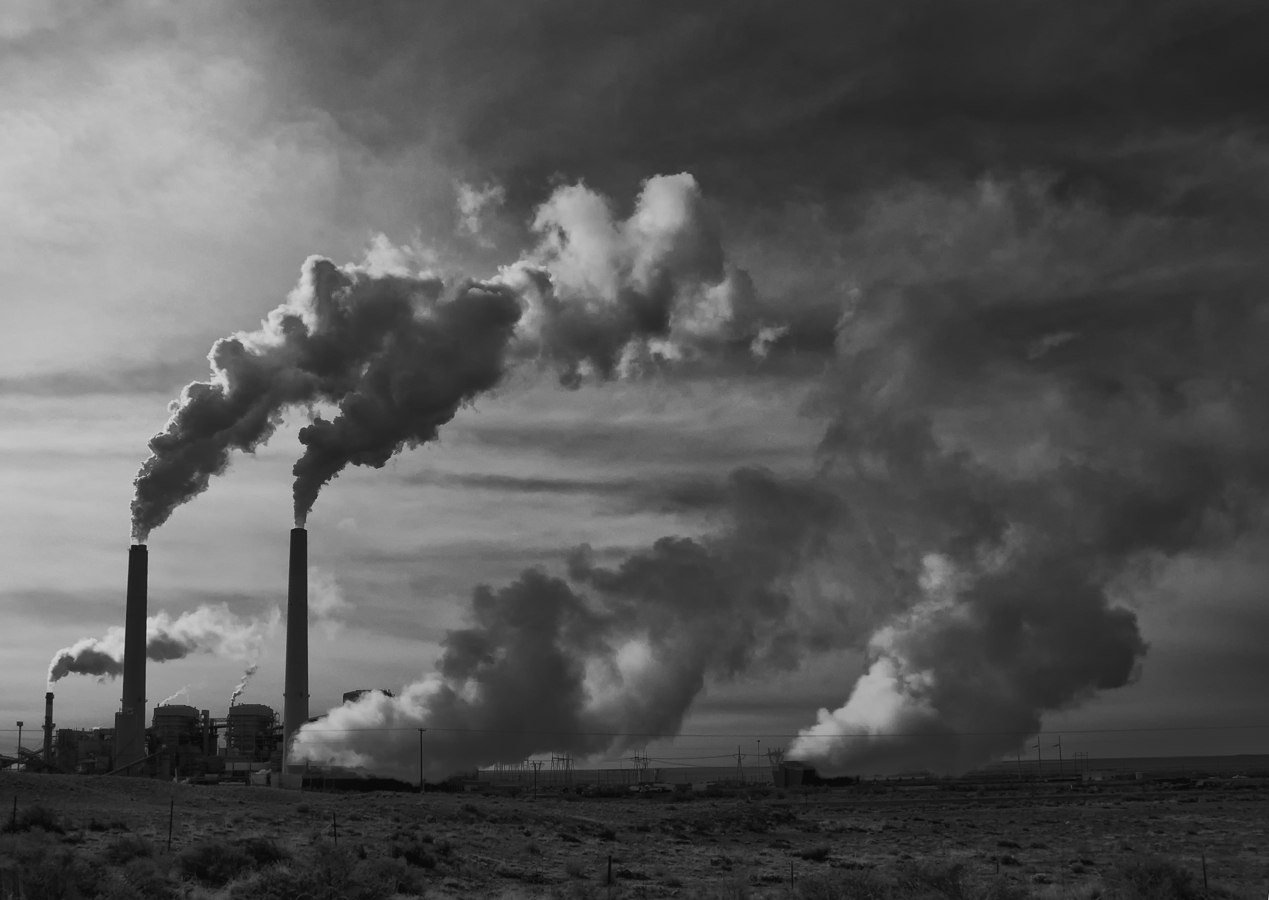
When someone speaks about coal, it always comes to mind that coal is a polluting source of energy that we need to stop using, to keep our planet safe. But wait a minute; did you know that 41% of the world’s electricity production is based on coal?!
But what does this mean? Why countries like USA and Germany are are still using coal for electricity production?

The answer is not a simple one, but it is a combination of economic, supply and demand, technology and sometimes even politics. But we all know how coal is very polluting energy source was the sole reason for cities like London to suffer from Black cloudy sky that blocked sun light even in good summer days. At that time many poets mentioned these clouds of smog in their poems. And we thought that this century is not going to be a coal tolerant one! Surely we (environmentalists) were wrong about that.

Saturday, July 27, 2013

Are We Actually Using Batteries?!

In our daily life there are many uses to batteries ,as they are the power source of most of our gadgets, but the question that comes to my mind is are we using batteries to their full potential?!

Well, to answer that question I've looked for many sources to find answers. I even bought a digital voltmeter!. And started measuring the output voltages of the batteries that I was going to dispose ,as they no longer ran my gadgets, and to my surprise most of the batteries I was measuring were giving an output voltage of not less than 1.3 volts! which is good, as brand new batteries have an output voltage of about 1.5 volts. After that I started to look for ways to make use of the remaining voltages in those batteries. Oh ya I want to squeeze the juice out of my batteries!

I found out that there are many gadgets that need batteries to be of great power not only to have a good output voltage but also to have a good current output. mostly gadgets like portable CD players or my digital cameras will need more power from the battries than other gadgets like a TV remote control or a ceiling clock. So I found out that batteries that are no longer good to run my CD player were great for running my TV remote control with great efficiency and latency!

Making use of your batteries is not only more economic but is better to the environment as the manufacturing process of batteries is of course adding carbon emissions to the globe. So it is responsibility to make use of these batteries and also a responsibility to dispose those batteries properly. 

Moreover I had another battery to run a clock!. So I figured that the gadgets I use need different quantities of "juice" to run so I started looking for ways to drain the juice out of them.

The most effective way to drain a battery is by placing it in a flash light, of course the flash light is going to go dimmer as the batteries run out but it is an efficient way to squeeze the juice out of your batteries.

Another way is to place batteries in a remote control that is used for TV, DVD player, Video player etc almost most remote controls need very low energy and will not mind batteries that are of a voltage lower than 1.3 volt. And even if the energy were too low the remote control will still function but its range is going to be reduced.

If you have a cordless mouse or keyboard then you can place theses batteries in these gadgets as they too do not need that much energy of the batteries, but be careful to place batteries that are too drained to run them as they will no longer run.

If you are into electronics then you might want to look into Ray's DIY Electronics Hobby Projects as this is a good way to get the juice of your batteries until they are as low as 0.65 volts.

Finally and most effectively also the most green solution is to get rechargeable batteries and replace all your batteries with rechargeable ones. Even though it might be more expensive to buy but after using them some more time you are going to save a good deal of money rather than having to buy more batteries. Here's an article that has more information about rechargeable batteries.

For your comments and thoughts please write it in the comment box below


Thursday, November 8, 2012

LED: Energy Conserving Light Sources


LED lights have many advantages over other kinds of lighting, including compact fluorescent lights, or CFLs, an unsafe lighting technology. Here are eight reasons to love LEDs, or light-emitting diodes, adapted from material provided by Polar-Ray LED Lighting Solutions.

1. LEDs Have Been Around for Decades

ledPhilips
LED lighting is a proven technology that's been in widespread use since the 1960s. Traffic lights, electronic instruments and other devices have relied on LED lighting -- and if you're old enough to remember the first geeky calculator you bought in the 1970s, there's a chance it may have been lit with LED light.

2. LEDs Can Create a Warm, Soft Glow

ledsGeneral Electric/Polar-Ray
Some users associate LEDs with a harsh, cold, glaring light, but newer LEDs are capable of producing a warm, soft -- dare I say romantic? -- glow, just like the inefficient incandescent lights that are still widely used.

3. LEDs Are Ridiculously Energy-Efficient

LED lights use 75 to 80 percent less energy than older incandescent lights. And because lighting consumes a significant amount of household energy, the savings can add up fast.

4. LED Lights Will Save You Money

led lightsPolar-Ray
If you're more motivated by cash than by environmental concerns, here's your catnip: LEDs will save you money over both CFLs and regular incandescent lights. One study found that over the lifetime of an LED light (estimated at 50,000 hours), LEDs cost just $95 to operate -- CFLs, by comparison, cost $159 over the same period, and incandescents cost a whopping $652. These figures don't even include the hassles of buying and replacing lights. LEDs cost more up front, true -- you can expect to be at least $10 per bulb, depending on the type and the manufacturer -- but like most new technologies, that cost is dropping every year.

5. LEDs Might Outlast You

If you hate changing burned-out light bulbs, raise your hand -- or, on second thought, don't. LEDs are generally estimated to last at least 25,000 hours, and often up to 50,000 hours. Incandescents only last 1,200 hours, so you'd have to replace an incandescent light 42 times to get the light of a single, solid-state LED. CFLs, by comparison, usually last 10,000 hours, so you'd only have to change them 5 times to match one LED light. And speaking of changing light bulbs...

6. LEDs Contain No Toxic Mercury

light emitting diodes
I would be a big fan of CFLs if they didn't contain mercury, a toxin associated with birth defects, brain damage and other disorders. That's why CFLs can't be thrown in the trash -- and it's very tricky to clean up a broken CFL. LEDs' biggest advantage over CFLs is that they contain no mercury or other hazardous materials. None. Zip. Nada.

7. LED Lights Are Cool - Literally

Ever try to unscrew a hot light bulb? (Not twice, I'll bet.) Incandescent and halogen lights can be very hot, which leads to a number of safety issues. LEDs, on the other hand, are totally cool even after several hours of use -- they're even cooler than CFLs.
leds

8. LEDs Can Be Dimmed


LED lights can be dimmed, which is not always the case with CFLs. Additionally, LEDs come on instantly (again, better than CFLs) and don't flicker (ditto). Finally, their light output is constant over the lifetime of the lamp, fading only when the lamps are at the end of their very, very long life.
led

9. BUT - Not All LEDs Are manufacruerd Equal

Unfortunately, the Department of Energy and others have noted that there are some poor-quality LED manufacturers out there selling inferior products that grow dim, shift in color or begin to flicker after just 1,000 hours or so. (Note the two photos at left, after 100 hours and after 1,000 hours.) To protect yourself from these problems, look for Energy Star-qualified LED lights made by reputable manufacturers.

Sunday, May 6, 2012

Smartphones: Android Going Green

The advancement in smartphone technology has lead to a lot of big players jumping in on the action. Manufacturers teaming up with development heads devise and design strenuously for newer and better operating systems and software's supporting the dynamic platform of their machines, in this case smartphones.

Android is the mobile operating system released by Google after the company acquired Android, Inc. The word Android literally translates to something which has a biological foundation and closely mimics a human being. Any phone that uses an Android operating system is an Android smartphone. From a technological point of view, Android consists of; an operating system, middle-ware and key application. Android Smartphone's uses a version of the Linux kernel that has been modified to serve the mobile environment. Hence it is an open source Operating System (unlike Microsoft's Operating Systems).
Android Phone
Smartphone using Android OS

 The Android operating system was first released on 21 October 2008. Since then, various updates have been seen. These updates have mostly taken care of security issues or added new features.

According to a latest Global Network Research, Android surpassed iPhone OS market share for the first time on global basis in March 2011. Android is growing at a faster pace than iOS and now holds 14.5% of global impression share on the InMobi network. Globally, mobile impressions continue to grow rapidly, increasing by 21% on the InMobi network over just 90 days, driven primarily by smartphone growth of 34%. Android OS should exceed 40% share of smartphones worldwide with Samsung, HTC and Motorola leading the way with handsets based on the open-source platform.

In Q4 of 2010, Android passed Nokia's struggling Symbian as the leading operating system worldwide. A growing list of vendors who have made Android as the cornerstone of their respective smartphone strategies is propelling the growth of Android. The vendors include Samsung, HTC and Motorola, all of which have doubled their smartphone market share in the course of cranking out and selling various Android handsets.

The success amongst the investors about this open-source platform is worth noticing as well. Recently, Tapjoy, mobile monetization company, is starting a $5 million fund to make it easier for app creators to shift their apps to the Android mobile operating system. It's a vivid sign that one small company is finding it easier to business on the Android platform. Moving on, Google Nexus, one of the benchmark for quality Android devices over the past two years has gotten upgraded to Nexus 4G.

 Nexus 4G is rumored to be packing a dual-core Snapdragon processor. It will also run Android 4.0 "Ice Cream Sandwich"; judging from Google's past Nexus devices, it will likely be the first phone to run the new OS.

Android application development has also picked pace as its market share and productivity sky-rocketed globally. Android developers and prospective Android application development agencies are working in tandem and delivering the best Android mobile applications for Android Marketplace. One of the most common and popular Android application is the smartphone game, Angry Birds.

Global winds of technological development specifically mobile application developments are bringing glad tidings for Android open-source. The future is no longer fruity and Apple blue, its Android green.

Monday, April 16, 2012

Samsung Gone Solar With Blue Earth


If you have a solar powered home, solar cooking machine, solar watch, solar charger for your devices and you're thinking about buying a solar car, then this solar mobile phone is for you. The new Samsung Blue Earth is the first solar smartphone in the mobile industry.

Smart and Stylish Move
With all the environmental problems the world is facing, anyone can now be a part of the solution by using environment friendly products that are available in the market. The well-known Korean company takes the lead in raising environmental awareness by producing this incredibly smart solar powered phone that would be perfect for everyone's needs.
Armed with a solar panel on the back, the phone can go anywhere with you when you go for camping and other out of town trips. The sleek and stylish design can match your executive or casual look. At a cut of 107 x 53 x 13.9 mm, this phone is a little heavy with the weight of 118.9 grams.

The phone has different shades of blue with a glossy that gives a relaxing and comfortable feel to its users. The common touch screen display has a pixel size of 240 x 400 which displays 256,000 colors makes images lively and pleasing to the eyes. You can find the solar panel at the back of phone which adds a classy look to it. The phone is handy but is not easy to hold because of the slippery feel of the solar panel.

Phone Functions
Samsung Blue Earth is a basic smartphone that doesn't have high powered hardware that other smartphones have. This phone only matches the personality of simple Earth loving people. Integrated to the mobile phone is a 180MB read only memory (ROM) and an additional 16GB memory that can be accessed with a MicroSD card. You can stay connected with friends, family and co-workers with GSM, GPRS, EDGE, A-GPS, HSPA, Wi-Fi, Bluetooth 2.1, and USB connectivity tools.
You can easily send information through text and multimedia messages, email, social website updates and calls anytime too. The phone has tools for time management such as the alarms, calendar, memo and to-do list to help keep you on track and increase your productivity. It has tools like the calculator, world time application, countdown timer and stopwatch as well as a voice recorder and unit converter that can be used when the need arise.
One of the editors of cnet website Kent German says:"With its eco-friendly design and spiffy solar panels, the Samsung Blue Earth is more than just a gimmick; it's also an appealing cell phone with character."

Earth-Friendly Package
This high quality eco-friendly phone from Samsung will be a sure hit to nature lovers. You see, the phone including its package is made from recycled materials. Though it may be hard to believe at first, Samsung has disclosed that the handset is made from old water bottle plastic. And also during production, it shows that there are no emissions of harmful substances like phthalates and beryllium. The box used for packaging the phone is made from recycled paper and printed with soy ink.

And if that is not enough to make eco-fans happy, the phone boasts of eco-friendly tracker apps and profile. The unique "Eco Mode" profile lets you save energy by automatically timing the backlight and reducing the brightness. It also runs the "AccuWeather" that gives update on the weather condition and the "Eco Walk" application that keeps track of how much carbon dioxide was reduced in the air with your every step.

Wednesday, September 28, 2011

McDonald’s Turning Green

In McDonald’s 2009 Best of Green highlights, they mention that their use of an interactive software program, EcoProgress, for managing and reducing energy usage in restaurants in France achieved an 11% savings in electricity.


In Australia, McDonald’s is involved in water management and say that over a 20 year period their advanced stormwater retention tanks can save nearly 4 million liters of water. In addition to this they are using water-conservation technologies that include low-flow spray nozzles, dual-flush toilets, and extensive native landscaping and water conservation improvements through smart irrigation practices. McDonald’s Australia’s recently updated landscaping guidelines educate contractors and field personnel on issues such as water conservation, the use of native and drought-resistant plantings, and advanced stormwater retention methods.

“In Brazil, Chile and Argentina, McDonald’s has partnered with local organizations that transform used cooking oil into biodiesel. Currently, 270 restaurants in these markets deliver their used oil to be converted into biodiesel, representing over 1,000,000 liters of oil to date.” Is this superficial greenwashing or is McDonald’s stepping up to the plate on environmental issues?


McDonald’s is also jumping into the green building environment in the US. Last year, they opened their first “green restaurant” (in Chicago) for a new pilot program on green building. It received the Gold LEED rating! In one location in North Carolina, it has actually installed a charging station for electric vehicles.
McDonald’s is also making a big difference in Japan. By joining the Team Minus 6% program hosted by the Japanese government, “to reduce CO2 emissions by 1kg per person, per day, by offering a discount to consumers who registered to participate in the program,” McDonald’s helped to increase the participants from 40,000 to 380,000.Also McDonald’s Japan has installed LED lighting in 33 restaurants in 2009, CO2 emissions were reduced by 18 tons annually per restaurant and electricity consumption in the restaurants’ dining areas was reduced by an average of 44 percent, saving an average of $9,400 per year. Based on the demonstrated environmental and cost benefits, the decision has been made to install LED lighting in all new McDonald’s restaurants in Japan, and a review is underway to determine if LED lighting should be standard for all McDonald’s Japan restaurants.

In 2003, McDonald’s opened its first HFC-free restaurant in Vejle, Denmark. Equipped with appliances operating on natural refrigerants such as Propane, Isobutene, and CO2, the restaurant has none of the HFC gases harming the ozone layer and contributing to climate change. Compared with restaurants using conventional technology, the pilot restaurant consumes about 12 percent less energy and its Total Equivalent Warming Impact is on average 27 percent lower. Emissions are reduced by 25 tons of CO2 equivalents per year. "It really is cool to be green!" they say.

Moreover McDonald's saves nearly 161,000 trees a year thanks to the fact that the innovative container that holds the Big Mac (as well as the Quarter Pounder and Filet-O-Fish) is made with at least 37 percent recycled content.

Is McDonald’s a world leader in environmental issues now, or is this minor activity compared to their non-environmentally friendly activity?

Thus such an influential company is going behind green matters and that can be a huge benefit to the environment. For sure, they have influence on the success of the soya and cattle moratoria in the Amazon. And, clearly, they are helping to boost climate change action in Japan. They are doing a lot with some of their buildings to reduce energy usage. Is it enough? Is it living up to it’s environmental responsibilities? Is it a multi-national company others can follow?

If you have any thing in mind please write your comment below, and I'll be very happy to read it and even reply to it!